
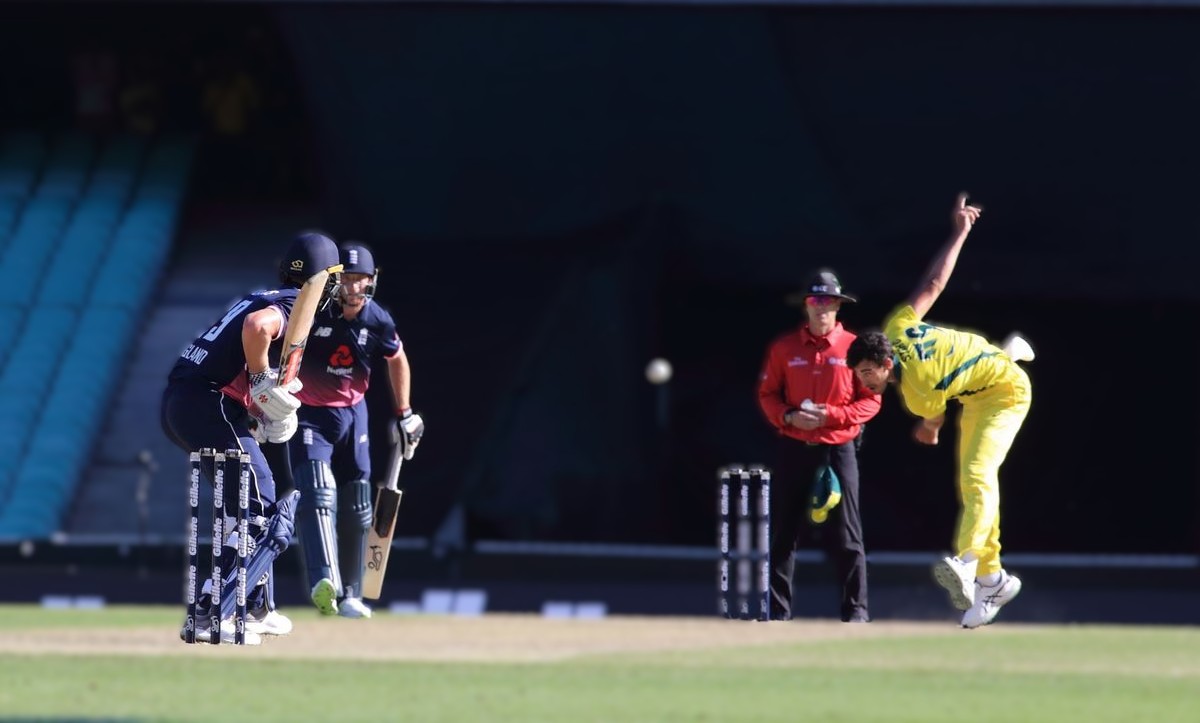
The short answer: reverse swing is possible in T20 cricket in Pakistan, but it’s rare, requires a specialist bowler, and Karachi Kings don’t currently have one who can do it consistently. Here’s the deeper story — and who they should target.
The Science and the Format
Reverse swing happens when one side of the ball becomes roughened and heavier than the other, causing it to swing in the opposite direction to conventional swing. The ball needs to be at least 12-15 overs old for this to work, which is why it’s traditionally been a Test and ODI weapon rather than a T20 one [1].
But the game is changing. In the IPL, bowlers like Mitchell Starc have shown that reverse swing can be devastating in T20 cricket when executed at high pace [2]. Nitish Rana, after facing Starc, admitted: “Reverse swing had completely gone away from cricket, whether it was red ball or white ball. Suddenly, if someone can execute 11 yorkers in 12 balls at a 145 [kph] pace, then you have to give Starc the credit” [2].
The key is the yorker. In T20 cricket, bowlers are forced to bowl a fuller length, allowing the ball to reverse — and a swinging yorker at the death is almost unplayable [3].
Why Pakistan’s Conditions Are Ideal
Allan Donald, one of the greatest fast bowlers of his generation, was explicit about this when he became Australia’s bowling coach for a tour of Sri Lanka: “Reverse swing is massive in the subcontinent. I’ve played enough against Wasim Akram and Waqar Younis to know what it takes, what sort of skill it takes and what sort of patience and discipline it takes to be able to execute that” [4].
Pakistan’s pitches are dry and abrasive. They scuff the ball quickly, which is exactly what you need for reverse swing. Wasim Akram built his entire legend on this skill, and he learned it on these very surfaces [5]. Waqar Younis used reverse-swinging yorkers at 150 kmph to terrorise batters for over a decade [5].
So the conditions exist. The question is whether a T20 bowler can get the ball old enough.
The Eshan Malinga Blueprint
Eshan Malinga has quietly become the premier reverse-swing bowler in world T20 cricket. ESPNcricinfo analysed his method: he brings his arm slightly lower once the ball is ready, tilts the seam towards fine leg, and bowls 60% of his deliveries in the second half of the innings [6].
The key is ball management. In Hyderabad, where Malinga bowls, the outfield is deliberately hard and bare. Fielders bounce their throws on the square to scuff the ball up faster. By the 11th over, the ball is ready — and Malinga can reverse it for tail of more than two degrees [6].
Malinga himself explained: “After six overs the ball gets damaged here, so we needed to make use of that. When I bowled at practice, the ball reversed, so I think a plan emerged where we were going to use the scuffed up ball and take advantage of that” [6].
This is the blueprint. It requires a captain and coaching staff committed to the plan, fielders willing to scuff the ball, and a bowler with the action and pace to exploit it.
Karachi Kings’ Current Attack: The Problem
Karachi Kings’ PSL 11 squad was built around spin dominance and seam accuracy, not express pace [7]. Let’s assess who they have:
Hasan Ali is a precision bowler now. He relies on seam position and variations, not raw pace. Reverse swing is not his game at this stage of his career [7].
Mir Hamza is a left-arm pacer who relies on lateral movement with the new ball. He’s effective early, but old-ball reverse swing isn’t his strength [7].
Mohammad Abbas Afridi is statistically excellent — his T20 strike rate is outstanding — but he operates at 130-140 km/h and wins with change-ups and yorkers, not reverse swing [8].
Ihsanullah is the wildcard. He was signed for his raw speed and potential to unsettle opposition batters [9]. He has been clocked at 150 km/h. He is exactly the profile of bowler who could reverse swing the ball at pace. But he wasn’t selected in Karachi’s early PSL 11 matches, with reports suggesting the coaching staff preferred control over raw speed [7].
Rizwanullah is a 17-year-old talent with pace and bounce, but asking a teenager to master reverse swing in T20 is premature [10].
The verdict: Karachi has no bowler currently executing reverse swing in T20 cricket. Ihsanullah has the tools but isn’t being used. The rest lack the pace or the action profile.
Who They Should Target
Pakistan is producing express pacers at an unprecedented rate. The PCB has identified Qayyum Khan, a young pacer from Jhang who can consistently reach around 150 km/h and even go beyond that mark [11]. He came through the Prime Minister’s Talent Hunt Program and is now training at the National Cricket Academy [11].
Qayyum is exactly the type of bowler Karachi should pursue. He has raw pace, he’s young, and he’s being developed by the PCB for higher-level cricket [11]. If Karachi can sign him before he becomes a national team regular, they’d have a genuine reverse-swing option for years to come.
The alternative is to look overseas. Eshan Malinga has shown what a specialist reverse-swing bowler can do in T20 cricket [6]. A bowler of that profile — 140+ kmph, round-arm action, old-ball specialist — is worth investing in.
The Bottom Line
Reverse swing in T20 cricket in Pakistan is possible. The conditions are right, and modern bowlers like Mitchell Starc and Eshan Malinga have proven it can be a match-winning weapon. But it requires a specific type of bowler and a tactical commitment from the captain and coaching staff.
Karachi Kings don’t have that bowler right now. Ihsanullah is the internal option, but he’s not being used. The franchise should target Qayyum Khan or a similar express pacer in the next draft — someone with the pace and action to make reverse swing a consistent threat.
In a league decided by fine margins, a reverse-swinging yorker at 145 kmph in the 18th over could be the difference between another net run rate elimination and a playoff run.